
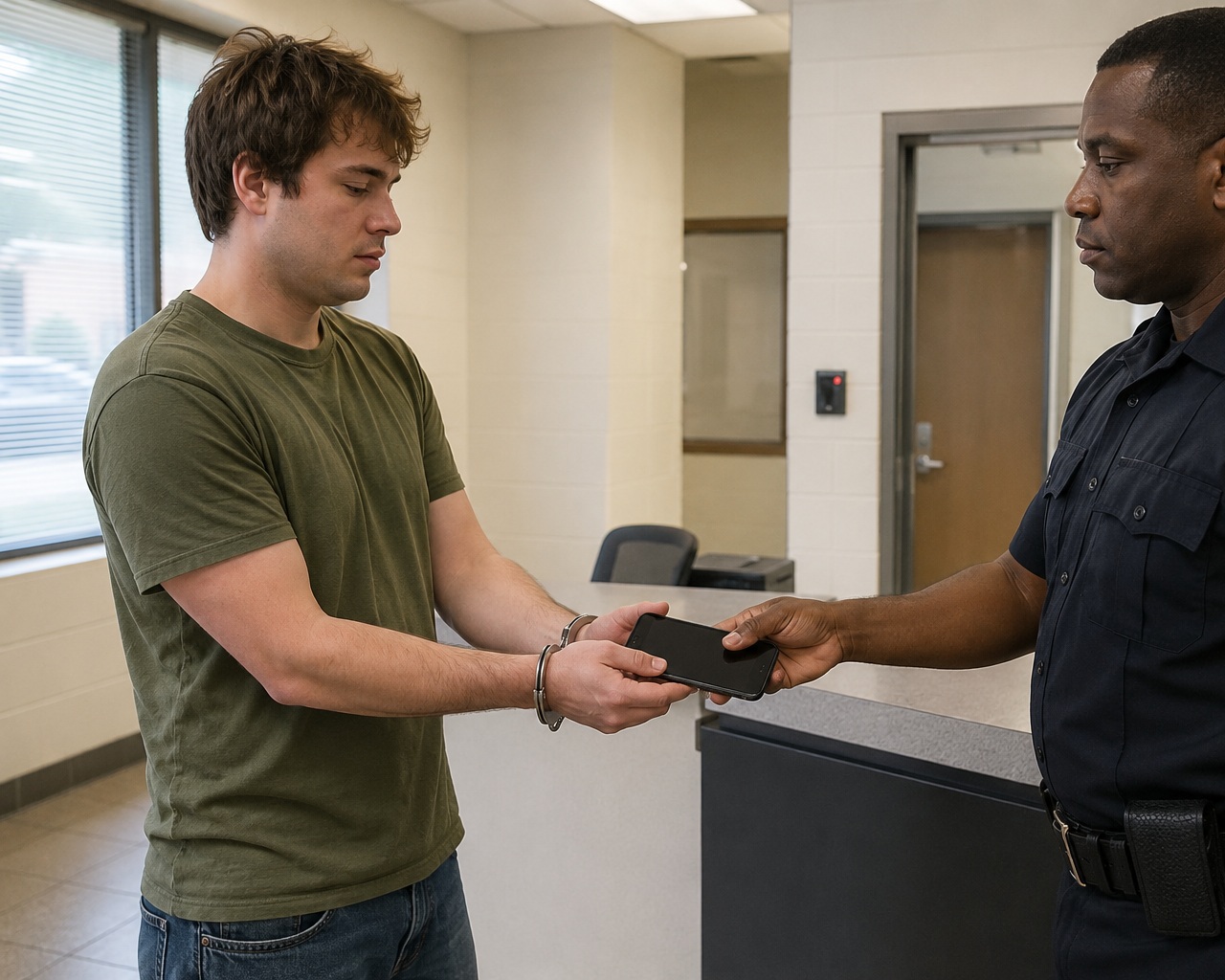
An Arrest Doesn’t Automatically Give Police Access To Your Phone
A smartphone can contain years of private messages, photographs, location records, financial information, social media activity, and internet searches. Access to that data may allow investigators to build a case that reaches far beyond the circumstances of the arrest.
Police may take possession of a phone found on someone who’s been arrested. That doesn’t ordinarily mean officers can unlock the device and start searching its contents. In Riley v. California, the U.S. Supreme Court held that police generally need a warrant before searching digital information stored on a cellphone seized during an arrest.
When investigators cross that line, a Green Cove Springs criminal defense lawyer can examine how the phone was seized, whether a warrant existed, what the warrant authorized, and whether the resulting evidence should be suppressed.
- An arrest alone usually isn’t enough: Police generally can’t search the digital contents of a phone merely because they arrested the owner.
- Police may still seize the device: Officers can secure a phone while seeking legal authority to search it.
- A warrant has limits: Probable cause and particularity still matter. A warrant isn’t automatic permission to search every file, app, photograph, and message.
- Consent can change the analysis: Voluntarily allowing access may give police authority they otherwise wouldn’t have.
- Passcodes raise a separate Fifth Amendment issue: Florida courts have imposed important limits on compelled access, but the law isn’t identical in every appellate district.
When Police May Search A Phone
Although an arrest alone doesn’t authorize a digital search, police may gain lawful access through a warrant or a recognized exception to the warrant requirement. The legal basis matters because each one comes with different limits.
| Situation | Can Police Search? | What Matters |
|---|---|---|
| Phone seized during arrest | Generally not the digital contents based on the arrest alone | Police can secure the device, but Riley generally requires a warrant before reviewing stored data. |
| Search warrant | Usually yes, within the warrant’s lawful scope | The warrant must be supported by probable cause and sufficiently describe what investigators may search for. |
| Voluntary consent | Potentially | Consent must be voluntary, and the search generally can’t exceed the permission that was actually given. |
| True emergency | Possibly, on a limited basis | Exigent circumstances can apply when immediate action is necessary, but a generalized concern about lost evidence isn’t automatically enough. |
| Probation or supervision condition | It depends | The wording of the supervision condition and the circumstances of the search can affect the person’s expectation of privacy. |
Police Can Seize A Phone Without Searching Its Data
Taking possession of a phone and searching what’s stored inside it are two different acts under the law.
Police may secure a phone after an arrest while applying for a search warrant. Officers can take steps to preserve the device and prevent someone from remotely altering its data without opening applications, reading messages, or reviewing photographs.
That distinction matters when officers claim they needed immediate access to preserve evidence. The Supreme Court specifically recognized in Riley that police have ways to secure a phone while obtaining a warrant instead of simply searching the device first.
A Phone Search Warrant Isn’t A Blank Check
Florida law still requires probable cause and particularity when police seek a search warrant. Under Florida Statutes § 933.05, a warrant must identify the person, place, or thing to be searched and particularly describe the property or evidence to be seized. The statute now specifically addresses warrants involving computers, electronic devices, and the data stored on them.
An arrest doesn’t establish probable cause to search every part of a phone. Investigators should be able to connect the categories of data they’re seeking to the suspected crime.
For example, probable cause involving text messages exchanged during a particular period doesn’t automatically justify an unlimited review of years of photographs, health information, unrelated emails, financial applications, and private conversations.
A defense attorney can review the warrant, supporting affidavit, date restrictions, categories of data authorized for review, and forensic extraction to determine whether officers stayed within the lawful scope. Our discussion of illegal searches and seizures in Florida explains how evidence obtained beyond lawful authority may be challenged.
Compelling A Phone Passcode Raises A Different Constitutional Issue
A warrant authorizing police to search a phone doesn’t automatically answer whether the government can force the owner to reveal a memorized passcode.
That issue involves the Fifth Amendment protection against compelled self-incrimination because disclosing a password can communicate facts from a person’s mind, including that the person knows how to access the device.
For defendants in Clay County and the rest of Florida’s First District Court of Appeal, Pollard v. State is particularly important. The court rejected an order compelling a defendant’s passcode when the State couldn’t identify with reasonable particularity the information it expected to find behind the phone’s passcode. The court described a generalized demand for communications, photographs, and other data as too close to a fishing expedition.
The issue remains complicated statewide. In State v. Garcia, the Florida Supreme Court acknowledged that Florida appellate courts had reached different conclusions about compelled passcode disclosure but did not resolve the constitutional question on the merits.
Biometric unlocking, such as a fingerprint or facial recognition, can raise a different analysis from orally revealing a memorized passcode. Anyone facing an order or demand to unlock a phone should get legal advice about the specific facts rather than assume the same rule applies to every method of access.
What To Do If Police Ask To Search Your Phone
A person can protect their rights without arguing with officers or physically interfering with an arrest. What someone says and does at this stage can affect whether prosecutors later claim that access to the phone was voluntary.
- Refuse Consent Clearly: If you don’t want to authorize a search, you can clearly state, “I do not consent to a search of my phone.”
- Ask For A Lawyer: Request an attorney before answering questions about the device, providing a passcode, or voluntarily unlocking it.
- Don’t Explain What’s On The Phone: Statements about who owns the phone, where particular messages are stored, or what certain applications contain can themselves become evidence.
- Don’t Delete Or Alter Data: Deleting messages, destroying the phone, or remotely wiping information can create additional legal problems.
- Don’t Physically Resist: If officers proceed with a search you believe is unlawful, the legality of that search can be challenged later in court.
The same principle applies in other police encounters. When officers are gathering information, seemingly harmless statements can create problems later. Our article about what to do when police come to your door in Florida explains why protecting the right to remain silent and refusing unnecessary consent can matter before an arrest ever occurs.
An Illegal Phone Search Can Lead To A Motion To Suppress
If police searched a phone without valid authority, exceeded the scope of a warrant, or relied on consent that wasn’t voluntary, the defense may be able to file a motion to suppress.
The court can review the warrant, affidavit, body-camera footage, testimony, forensic extraction reports, and communications between investigators to determine how the evidence was obtained.
Suppression can prevent prosecutors from using unlawfully obtained text messages, photographs, location information, internet history, or other phone data. Evidence discovered as a result of the illegal search may also be challenged, although prosecutors can raise exceptions that sometimes allow evidence to remain admissible.
Digital evidence can become central to proving identity, intent, possession, communication between alleged participants, or someone’s location. Our blog on social media evidence in Florida criminal cases shows how heavily prosecutors can rely on digital information once they obtain it.
When Freedom’s On The Line Experience Matters
Aguilar & Sieron, P.A. has spent more than 40 years defending people accused of crimes throughout Green Cove Springs, Clay County, Jacksonville, and Northeast Florida. Attorney Mark Sieron is a former prosecutor who has focused on criminal defense for more than three decades.
We can review the search warrant, affidavit, body-camera footage, consent allegations, police reports, and forensic extraction to determine whether law enforcement respected the limits on a phone search. When evidence was obtained unlawfully, we can determine whether a motion to suppress may be appropriate.
Your future deserves a strong defense. We’re available 24 hours a day, 7 days a week from our office next to the Clay County Jail and Courthouse. Contact us for a free, confidential consultation.
“We highly recommend Aguilar & Sieron because of their expertise and knowledge of criminal law, as well as their good relationships and reputation in the community. Mr. Sieron, in particular, is not only a skilled professional, generous with his time and attention, but is also a compassionate and ethical person.” – A. D., ⭐⭐⭐⭐⭐