
The First Hearing After an Arrest Happens Fast, and the Bond Decision Made There Can Shape Everything That Follows
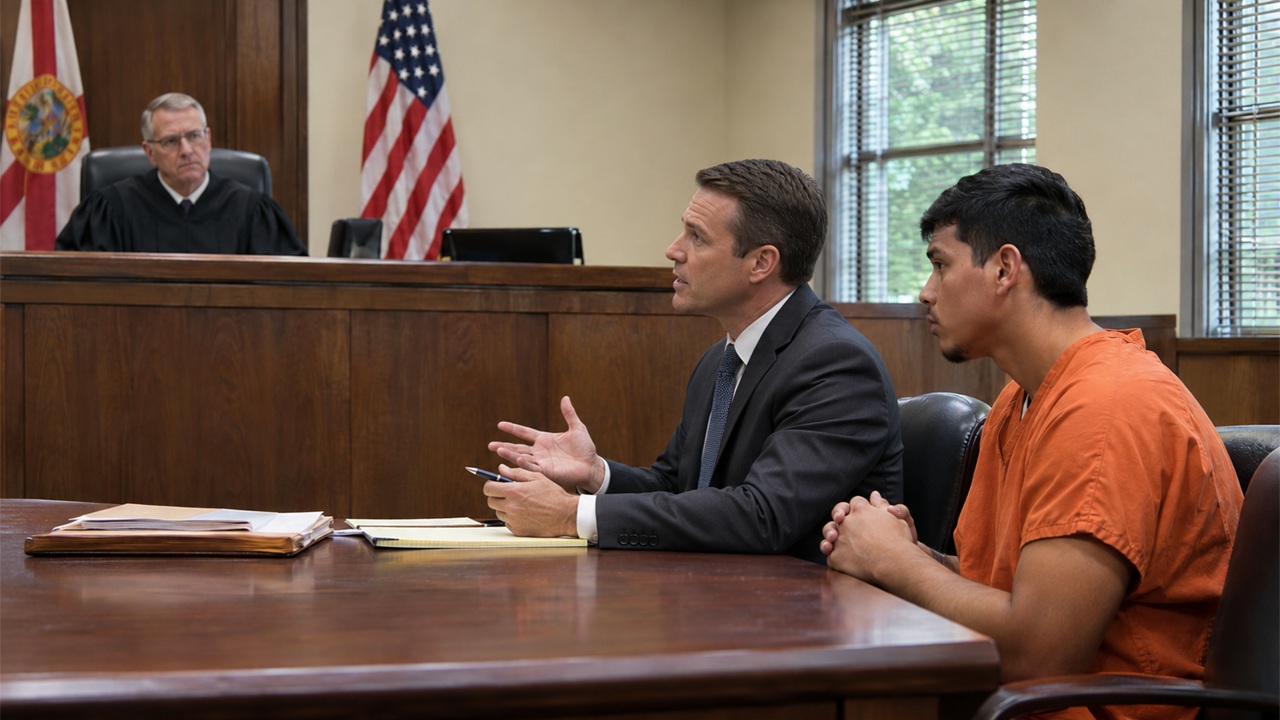
First appearance after an arrest in Clay County happens quickly. Families often have no time to catch their breath. Within a day of being booked into the Clay County Jail, the arrested person goes before a judge. Many of these hearings are held by video from the jail. They can be over in a few minutes.
Those few minutes matter. The judge decides whether there was enough reason for the arrest and sets bond. The judge also decides what conditions the person must follow if released. Families are often left scrambling to understand what’s happening and how to bring their loved one home.
Getting help before first appearance can change how the hearing goes. When a family calls right after an arrest, Mark Sieron starts preparing before the judge takes the bench. A former prosecutor and longtime Clay County criminal defense lawyer, he uses the hearing to push for release terms that let the person get back to work and family while the case moves forward.
|
First Appearance at a Glance
|
When and Where First Appearance Happens
Florida Rule of Criminal Procedure 3.130 requires a first appearance within 24 hours of arrest for anyone who stays in custody. In Clay County, the person is usually still at the jail in Green Cove Springs. Many hearings take place by video, with the judge in a courtroom and the arrested person on a screen.
A prosecutor and a defense lawyer are also part of the hearing. If the person hasn’t hired a lawyer, a public defender typically handles first appearance. Cases are often heard back to back, so each one may get only a few minutes.
Family members may be able to watch, though they usually can’t speak unless a lawyer calls on them. That’s why preparation before the hearing matters so much. What the family knows about the person’s job, home, and health only helps if someone gathers it ahead of time and presents it to the judge the right way.
What the Judge Reviews at First Appearance
At first appearance, the judge explains the charges and the person’s rights. These include the right to remain silent and the right to a lawyer. The judge also asks whether the person has hired a lawyer or needs one appointed. If the person qualifies, the judge can appoint a public defender.
For arrests made without a warrant, the judge reviews whether there was probable cause. That means enough reason to believe a crime was committed and that the person committed it. The judge usually looks at the arrest report and the officer’s sworn statements. If probable cause is missing, the person may be released.
First appearance isn’t a trial, and the judge doesn’t decide guilt or innocence. The person usually isn’t expected to explain what happened, and staying quiet is usually the wiser choice. Anything said at the hearing is recorded and can be used later in the case.
How Bond and Release Conditions Are Set
One of the biggest decisions at first appearance is whether the person can be released, and on what terms. Under Florida Statute 903.046, the judge considers several factors. These include the nature of the charge, the person’s criminal history, and ties to the community. The judge also weighs whether the person poses a danger or is likely to miss court.
Release can take different forms. A judge may allow release on recognizance, which means the person promises to return to court without paying bond. The judge may instead set a cash or surety bond, or order supervised pretrial release. Conditions often come with release, such as no-contact orders, GPS monitoring, alcohol monitoring, curfews, or travel limits.
Florida law has also tightened the rules for certain charges. Since 2024, many violent offenses and certain other crimes listed in Florida Statute 903.011 can’t be bonded out before first appearance. For some serious charges, prosecutors can also ask the judge to hold the person without bond until trial.
What Can Be Decided at First Appearance
First appearance covers several key issues in a short amount of time. Here’s what the judge may decide and why each decision matters.
| Issue | What the Judge Decides | Why It Matters |
|---|---|---|
| Probable Cause | Whether there was enough reason for the arrest | A lack of probable cause can lead to release |
| Bond Amount | How much, if anything, must be paid for release | Determines whether the person can go home |
| Release Conditions | Rules the person must follow while the case is pending | Violations can lead to arrest and loss of bond |
| No-Contact Orders | Whether the person must avoid certain people or places | Can affect where the person lives and who they see |
| Appointment of Counsel | Whether a public defender is assigned | Shapes who will handle the defense |
Each of these decisions can affect a person’s job, family, and ability to prepare a defense. Strict conditions or a high bond can keep someone in jail for weeks or months. That’s why the few minutes spent at first appearance deserve careful attention.
Why Having a Lawyer at First Appearance Can Matter for Bond
A judge setting bond has to make a quick decision with limited information. Filling in those gaps can make the difference. That might mean telling the judge about the person’s steady job and family responsibilities. Long ties to Clay County or a clean record can help, too, and those details can support a lower bond or release on recognizance.
Release conditions deserve the same attention as the bond amount. A no-contact order can keep someone out of their own home, and a travel limit can block them from getting to work. Pointing out errors in the arrest report and arguing for terms that protect public safety without upending the person’s life can keep those conditions in check.
Public defenders work hard, but they often handle many cases at each first appearance session. Hiring a private attorney means someone has prepared in advance, talked with the family, and focused on one person’s situation. It also means someone is there to make sure the person doesn’t say anything that hurts the case later.
Domestic Violence Arrests and Other Holds
Some arrests come with extra restrictions. In Florida, a person arrested for domestic violence must be held until first appearance. Bond can’t be posted on a schedule beforehand. The judge often sets a no-contact order as part of release, which may affect where the person can live.
Other situations can also lead to longer holds. A person arrested for a probation violation may be held without bond until a separate hearing. People with active warrants from another county or state may also face holds that delay release.
These situations make early legal help especially important. Mark explains the specific restrictions that apply and works to resolve holds as quickly as possible. Families also get clear answers about when and how their loved one may be released.
What Families Can Do Before First Appearance
Families often feel helpless after an arrest, but there are practical steps they can take to help. These actions can support a stronger argument for release.
- Gather Work and Residence Information – Details about the person’s job, employer, and how long they’ve lived in the area can support release.
- Contact a Lawyer Quickly – The sooner a lawyer is involved, the more time there is to prepare for the hearing.
- Avoid Discussing the Case on Jail Calls – Calls from the jail are recorded and can be used as evidence.
- Be Ready to Post Bond – Know how much money or collateral is available if bond is set.
- Note Medical Needs – Share information about medications or health conditions with the lawyer so it can be raised if needed.
Small details can carry real weight at first appearance. A judge who knows about a stable job and family nearby may be more willing to grant reasonable terms. Having that information ready, and a lawyer to present it, helps make the most of a short hearing.
What Happens After First Appearance
First appearance is just the beginning of a criminal case. After the hearing, the State Attorney’s Office decides whether to file formal charges. The next major court date is usually an arraignment, where the person formally responds to the charges.
Bond that’s too high or conditions that are too strict can be challenged with a motion asking the court to modify them. Changes in circumstances, such as a new job or a stable place to live, can support those requests. In the meantime, the work of reviewing the evidence and looking for weaknesses in the case can begin.
The early days of a case often shape what comes later. Decisions about bond, statements made to police, and evidence gathered right away can all affect the outcome. Starting the defense early gives the best chance to protect the person’s rights and future.
When Freedom’s on the Line, Experience Matters
Aguilar & Sieron, P.A. has defended people in Clay County and across Northeast Florida for more than 40 years. Our office sits directly across from the Clay County Courthouse and Jail in Green Cove Springs. That lets us act quickly after an arrest. His years on both sides of the courtroom mean he knows the judges, prosecutors, and procedures in Florida’s Fourth Judicial Circuit.
We’re available 24 hours a day, 7 days a week, because arrests don’t wait for business hours. We offer free, confidential consultations and explain our fees upfront. From first appearance through the end of the case, we focus on protecting your freedom and your future.
Has someone you love just been arrested in Clay County? Get a free, confidential consultation right away, before first appearance.
“When you hire Mark, he will tell you the process he will use, TRUST THIS MAN! There’s no price you can put on not being behind bars. If you’re reading this, call the office now and hire Mark Sieron, and focus on your family and life. Let Mark and his team take care of your legal needs. His many years in law practice is worth your time and money. It was an honor having Mark represent me before the court. Thank you, Mark and staff, I wouldn’t be home today if it weren’t for you.” – Doug C., ⭐⭐⭐⭐⭐